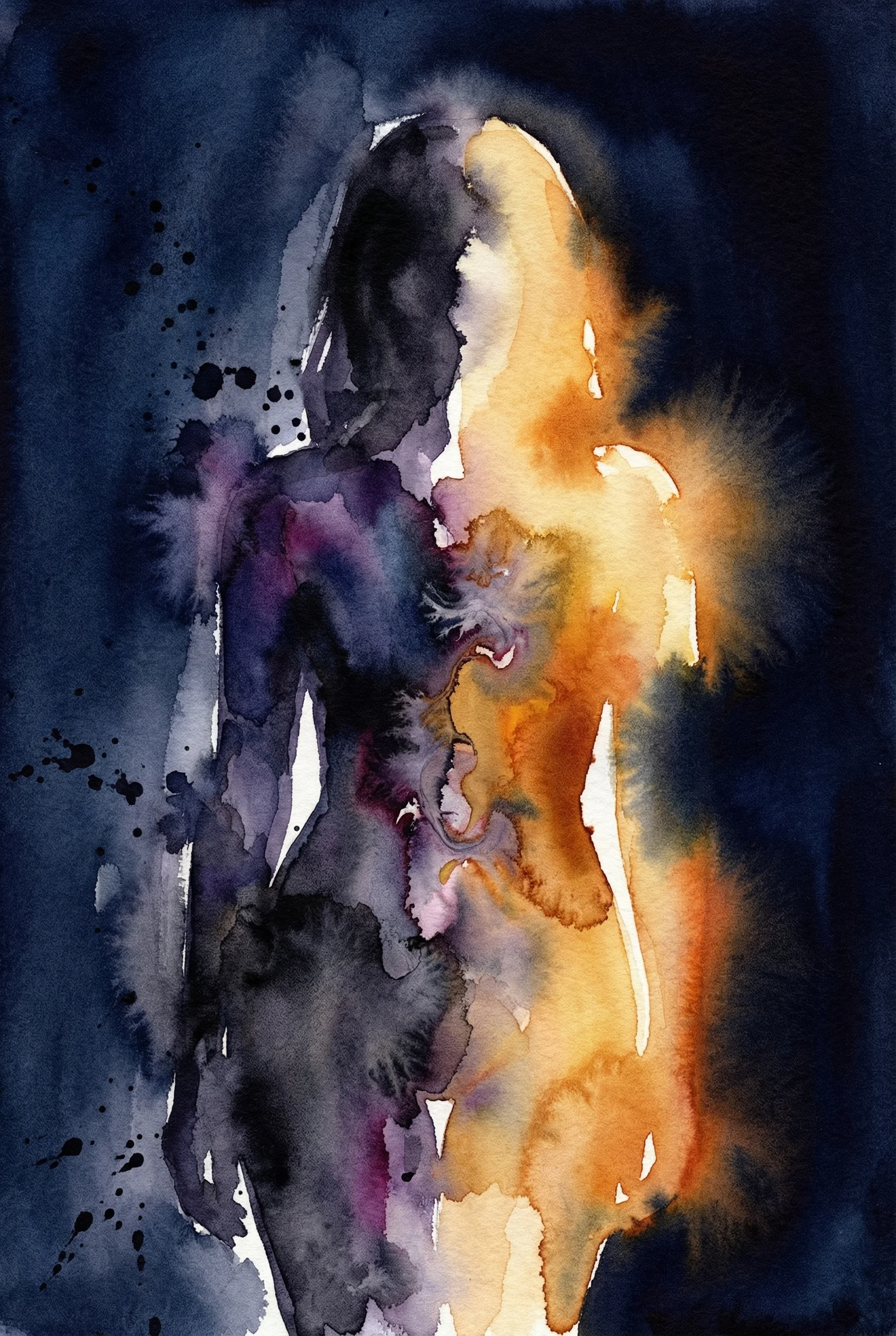
IFS gives you a map for relating to inner parts. Shadow work gives you a broad invitation to notice what you have pushed out of awareness. Both can make reflection more compassionate, but neither should be used as a shortcut to diagnose yourself.
The short answer
Internal Family Systems (IFS) is a therapeutic model developed by Richard Schwartz. The model describes the mind as a system of parts with different roles, alongside a calm, curious center often called Self. The IFS Institute’s model outline describes parts as valuable inner experiences rather than symptoms to eliminate.
Shadow work is a wider term, associated with Jungian psychology and contemporary self-reflection, for meeting emotions, traits, needs, or impulses that have become difficult to acknowledge. It is not one standardized method. A prompt, therapy session, dream journal, or creative practice might all be called shadow work.
Where they overlap—and where they differ
| Question | IFS | Shadow work |
|---|---|---|
| What is it? | A defined therapeutic model. | A broad family of introspective practices. |
| What does it notice? | Parts, protective roles, burdens, and Self-led qualities. | Disowned feelings, traits, needs, and repeating patterns. |
| What is the stance? | Curiosity, compassion, and unblending from a part. | Honesty about what is outside your preferred self-image. |
| What does it not provide? | A substitute for a qualified clinician. | A universal protocol or guaranteed outcome. |
What “parts work” means in practice
Parts work starts with a small language shift. Instead of “I am an angry person,” you might write, “A part of me is angry right now.” That does not deny the anger. It creates enough distance to ask a better question: what happened, what does this part fear, and what is it trying to prevent?
A part is not an excuse and it is not a fixed personality type. It is a way to describe a recurring pattern of feeling, thought, body sensation, or action. Naming a part can help you return to the same thread later without treating one difficult moment as your whole identity.
How to journal with both frameworks
- Start with a specific moment. Describe the trigger, your reaction, and what you noticed in your body.
- Name the pattern lightly. “The part that braces for criticism” is more useful than a permanent label.
- Ask what it wants you to know. Let the answer arrive without forcing a childhood explanation.
- Respond with respect. You can disagree with a protective strategy without shaming the part that uses it.
- Stop when you lose stability. Ground yourself and return later or bring the material to a qualified professional.
A journal for your parts
Imago helps you name parts, revisit patterns, and continue a self-led practice between sessions.

A note about safety and scope
IFS language and shadow-work language can both feel powerful. They can also be overextended. A difficult feeling is not proof of a hidden trauma, and a part is not a diagnosis. If reflection brings up panic, dissociation, self-harm thoughts, or material you cannot safely hold alone, pause and seek professional support. In the United States, call or text 988 for crisis support; elsewhere, use your local emergency or crisis service.
Frequently asked questions
Is IFS the same as shadow work?
Can I use IFS ideas in a journal?
Is Imago an IFS therapy app?
Sources: IFS Institute model outline and 988 Lifeline. This page is educational and is not medical advice.